It is July in Abilene, the thermometer outside reads 105°, and your air conditioner is pulling the hardest shift of its year. Most of the no-cool calls we get do not come out of nowhere — the system had been struggling for weeks, and the heat finally pushed it over the edge. Here is how to help yours keep up, spot trouble early, and know when it is time to call.
Why AC units quit in July, not January
An air conditioner does not fail on a mild day. It fails when it is working flat out. A weak capacitor, a dirty coil, or a low refrigerant charge will limp along in May and then give up at 4pm on the hottest afternoon of the summer. That is not bad luck — it is the heat finding the weak spot.
Around here, the deck is stacked against your system. West Texas dust cakes the outdoor coil, our long runs of 100°-plus days never let the unit rest, and a lot of homes are cooling against an attic that hits 130°. The good news: a few simple things keep most systems running all summer.
What you can do this week
None of this needs a technician. Ten minutes now can save you a hot, expensive afternoon later.
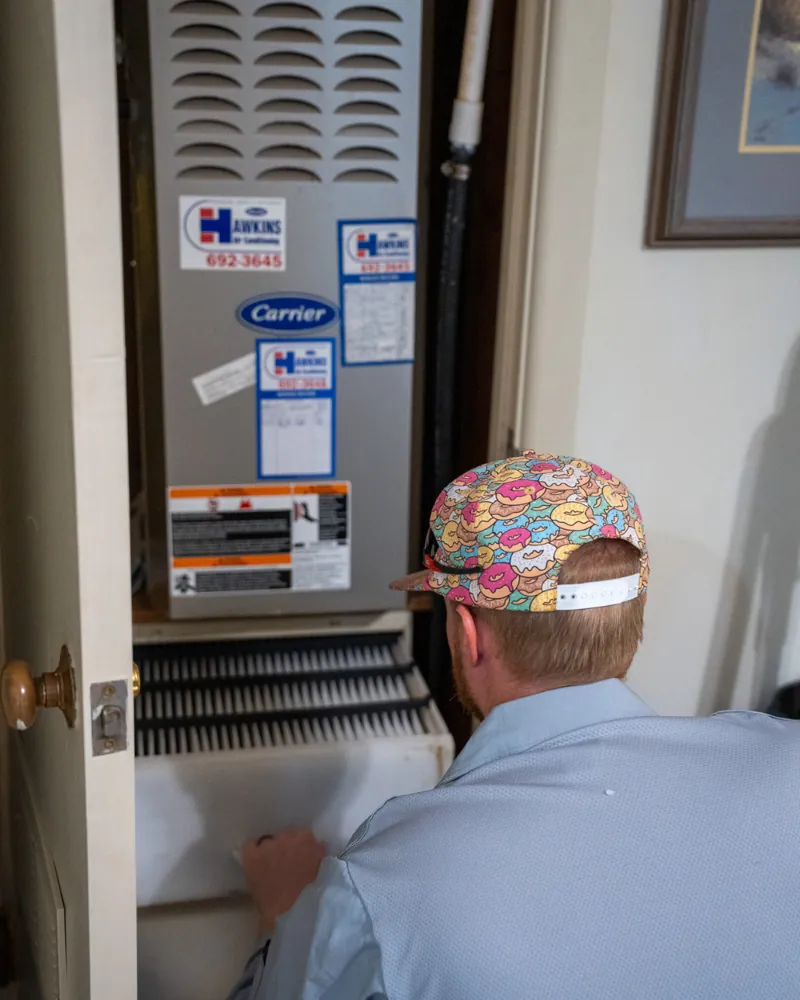
- Change your filter. A clogged filter chokes airflow and is the number-one reason for the "it is running but not cooling" call. Swap it every one to three months in summer.
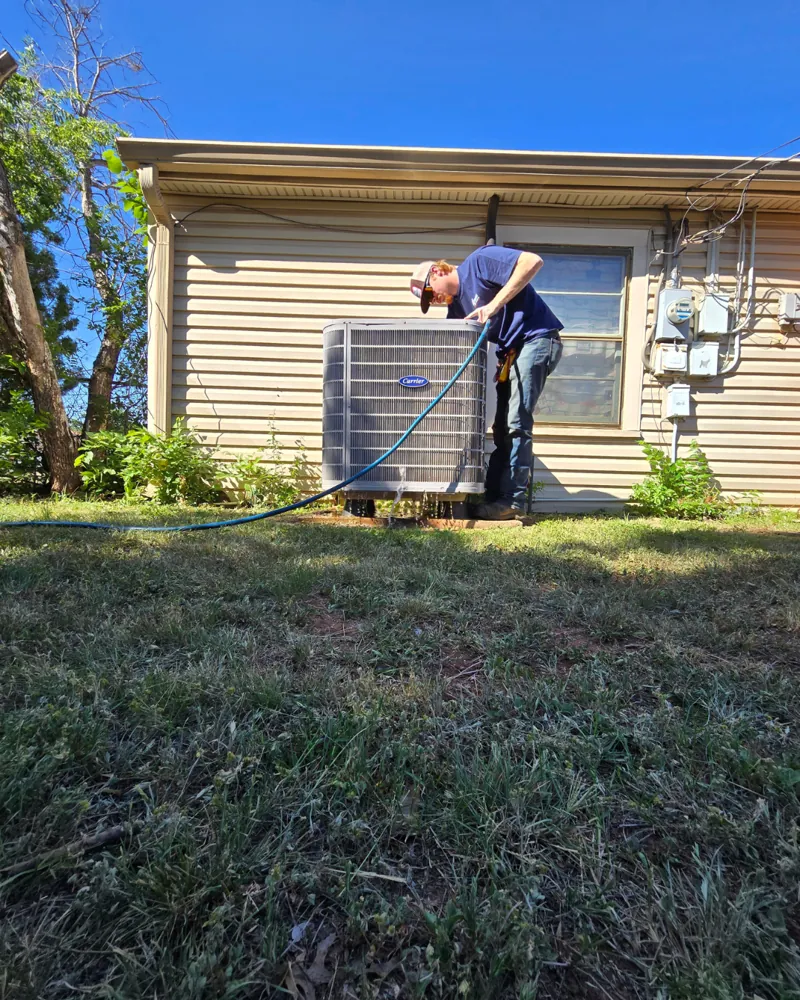
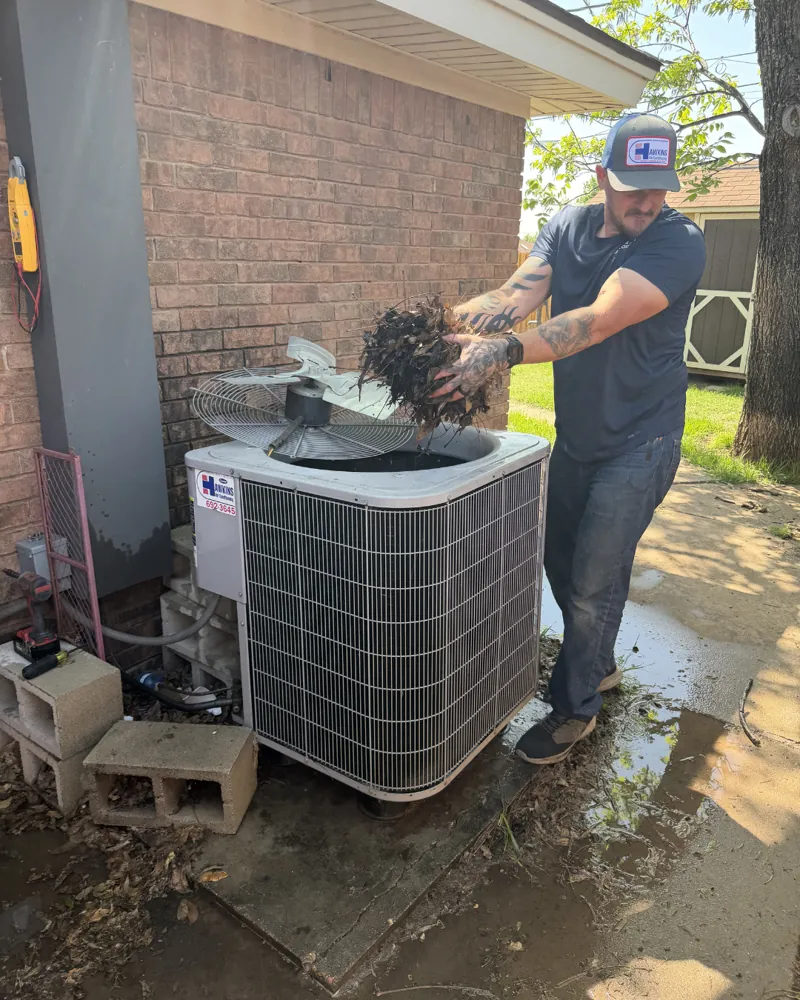
- Clear the outdoor unit. Pull weeds, grass clippings, and cottonwood fluff away from the condenser, and give it about two feet of breathing room on every side. Rinse the fins gently with a garden hose — never a pressure washer.
- Give it room to win. On a 105° day, most systems can only pull the house about 20° below the outdoor temperature. Setting the thermostat to 68° will not cool faster; it just runs the unit non-stop. Pick a number you can live with and let it hold.
- Keep the heat out. Close the blinds on the sunny side, run ceiling fans, and hold off on the oven and dryer during the hottest hours.
If your AC shuts off, wait about three minutes before turning it back on. Restarting too fast makes the compressor fight against high pressure — and that is how a $40 problem turns into a new compressor. Most modern thermostats build in the delay for you; older ones do not.
Warning signs it is about to give out
Your system usually tells you it is in trouble before it stops. Call us if you notice:
- Warm or barely-cool air coming from the vents
- The unit running constantly and never satisfying the thermostat
- Ice on the copper lines or the indoor coil
- A breaker that keeps tripping
- New buzzing, grinding, or rattling from the outdoor unit
- A puddle or steady drip around the indoor air handler
Catching one of these early is the difference between a same-day AC repair and a miserable weekend waiting on a part.
The cheapest fix is the one you do in spring
Almost every summer breakdown we see traces back to something a tune-up would have caught — a coil nobody cleaned, a capacitor reading low, a charge that was a pound down. That is the whole idea behind our maintenance plans: two visits a year, one before summer and one before winter, so the weak spot turns up in the driveway instead of at 4pm in July.
And if it is already August and you skipped the spring check, it is not too late. We will come take a look, show you what we find, and tell you what it will cost before we touch a thing.
When to stop and call us
Changing a filter and hosing off the condenser is homeowner territory. Refrigerant, wiring, and anything behind an electrical panel is not — that is where people get hurt or turn a small repair into a big one.
If you have done the easy stuff and the house still will not cool, that is our cue. We run same-day calls across Abilene and the Big Country when we can, and 24/7 for real emergencies. Call or text (325) 692-3645 and a real person — Debbie or Amber — will pick up and tell you honestly how soon we can be there.
Written by the Hawkins Air Conditioning team — family-run in Abilene since 1976. Questions? Call or text (325) 692-3645.