Quick answer: A furnace tune-up is an annual safety and performance check. A technician inspects the heat exchanger for cracks, tests the ignition and flame sensor, checks gas pressure and venting, cleans the burners and blower, and changes the filter. In Abilene, book it in early fall — before the first hard norther, not after your heat quits.
Most no-heat calls we run do not happen in the dead of winter. They happen on the first genuinely cold night of the year, when a furnace that sat untouched for eight months is asked to fire up and cannot. A fall tune-up is how you find the weak spot in October instead of at 11pm in December.
Why fall, and why before you need it
A furnace has been off since spring. Dust has settled on the burners, a flame sensor has quietly corroded, an igniter is near the end of its life. None of that matters in July. It all matters the first time the thermostat calls for heat. Getting the check done in the fall means any part that needs replacing gets handled on a mild day, on your schedule, instead of during the first cold snap when every HVAC shop in the Big Country is slammed.
What a furnace tune-up actually covers
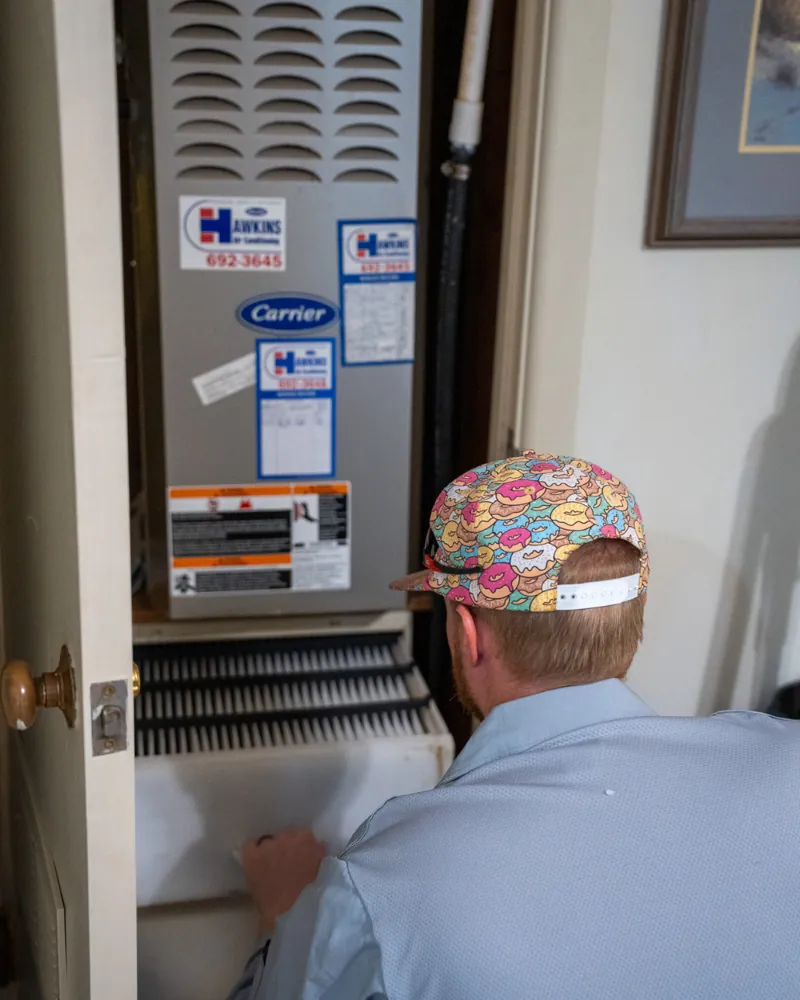
A real tune-up is more than a quick look. Here is what we go through:
- Heat exchanger inspection — the big one for safety (see below).
- Ignition and flame sensor — cleaned and tested so the furnace lights reliably every cycle. A worn igniter or dirty sensor is a leading cause of intermittent no-heat.
- Gas pressure and air-fuel mix — set so the furnace burns cleanly and efficiently, which keeps the gas bill down.
- Venting and flue — checked and cleared of blockage or soot so combustion gases leave the house the way they should.
- Burners and blower — cleaned of the dust and lint that build up over an off-season and choke airflow.
- Electrical connections and safety controls — tightened and tested so a loose connection does not shut you down mid-winter.
- Air filter and thermostat — filter changed, thermostat checked so it reads and cycles correctly.
You get a written summary of anything we find, and a straight price on any repair before we touch it.
The heat exchanger is the metal wall that keeps combustion gases — including carbon monoxide — separate from the air blowing through your house. When it cracks, those gases can leak into your air. Carbon monoxide is colorless and odorless, and CO problems almost always trace back to a cracked heat exchanger, a blocked flue, or a furnace that is not venting right. A tune-up looks at all three — and it is a good reminder to keep a working CO detector on each floor and near the bedrooms.
What a tune-up saves you
- The no-heat call — most winter breakdowns start as something a fall check would have caught.
- Money every month — a clean, correctly tuned furnace uses less gas to make the same heat.
- Years of life — neglect wears a furnace out early; regular service is what makes it last.
- Your warranty — most manufacturers require documented yearly service to keep it valid.
Do it yourself, or call us
Changing the filter is homeowner territory — do it every one to three months through the heating season. Anything involving gas, the burners, the heat exchanger, or the electrical side is not; that is where people get hurt or turn a small fix into a big one. That part is ours. If your furnace is more than about 15 years old, needs a major repair, or has a cracked heat exchanger, a tune-up visit is also the right time to talk honestly about whether repair or replacement is the better call — see our heating and furnace service.
Get ahead of the first norther
We have kept the Big Country warm since 1976. Book a fall furnace tune-up and we will make sure your heat is ready before you need it — or roll it into one of our H.A.V.E.N. maintenance plans so your heating and cooling both get checked every year without you having to remember. Call or text (325) 692-3645.
Written by the Hawkins Air Conditioning team — family-run in Abilene since 1976. Questions? Call or text (325) 692-3645.