Quick answer: Check it every month and change it when it looks gray. In practice, a standard 1-inch filter lasts 30 days to three months, and a thicker 4-inch media filter lasts three to six months, depending on its maker. Pets, a remodel, and a long run of cold nights all push you toward the short end.
Abilene's first freeze averages November 11, so October is the month to start the heating season with a clean filter. After that, the number printed on the package is only a starting point. What matters is the filter you have, the house it is in, and how hard the system is running.
How often to change a furnace filter, by type
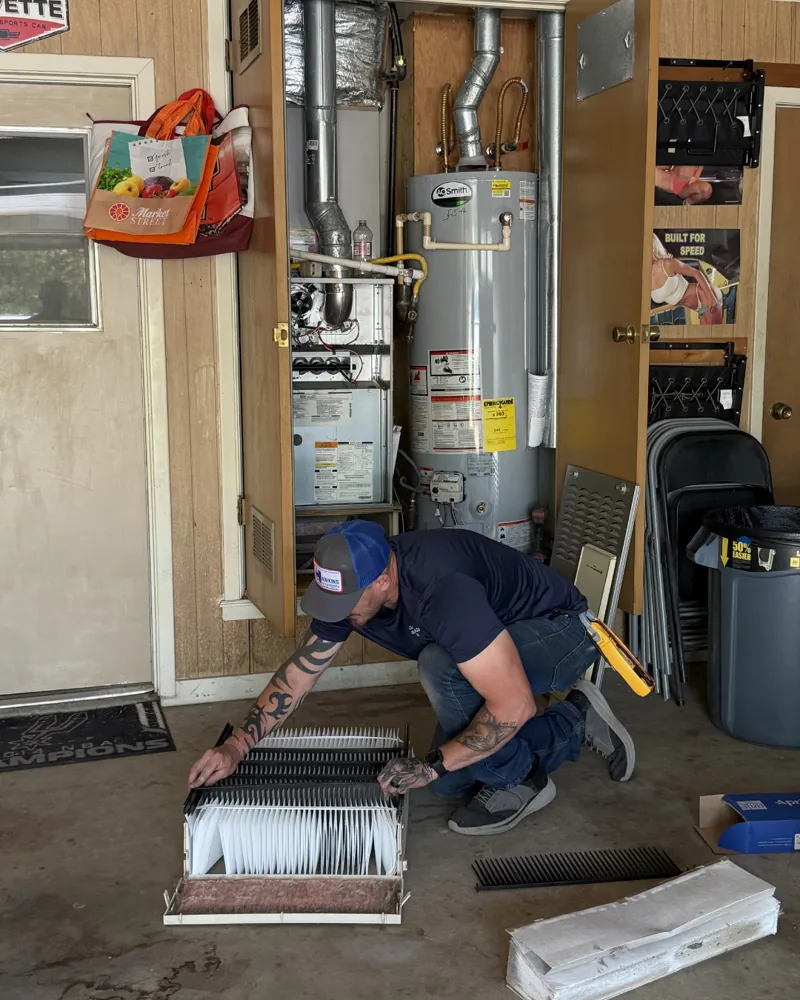
Carrier gives a range for each kind. A basic 1-inch filter, the flat one most homes have, should be replaced every 30 days to three months. A thicker 4-inch pleated filter, the kind that sits in a cabinet beside the furnace, usually goes three to six months, depending on its manufacturer.
ENERGY STAR keeps it simpler: check the filter once a month in your furnace, heat pump, or central air conditioner, and if it is dirty, change it, or clean it if yours is the reusable kind. That monthly look is the habit that matters. The ranges just tell you roughly when to expect a swap.
What shortens the schedule in an Abilene house
- Pets. Carrier lists animal dander right alongside dust and pollen as what builds up on a filter.
- A remodel. One major furnace maker's user manual says new or newly renovated homes may need more frequent changes until the construction dust dies down. If you are sanding drywall or pulling up carpet, check the filter weekly until the work is done.
- A higher-MERV filter. Department of Energy research says filters that trap finer particles are likely to clog sooner. Our indoor air quality post covers MERV ratings and why MERV 13 is not right for every system.
- Long run times. A filter loads up while the blower runs. A heat pump working through a cold week, or a thermostat fan set to ON, moves a lot more air through it.
- Wind and dust. West Texas wind puts dirt in every house, and the return pulls it straight to the filter. After a windy stretch, look sooner.
Find your filter and read the size
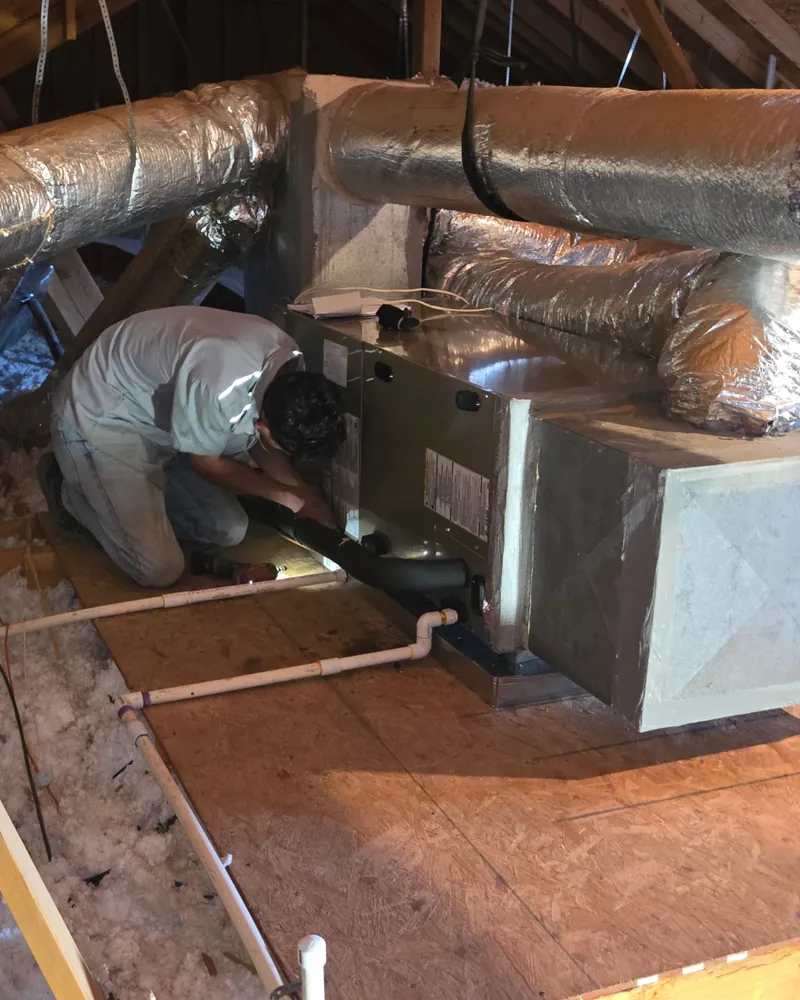
Carrier says the filter is usually in the blower compartment of the furnace or in the ductwork leading into it. ENERGY STAR adds that when the unit is up in the attic, the filter is often just inside a grille in a hallway ceiling or wall. Some homes have a filter at more than one return grille, so check them all.
The size is printed on the frame, and it is a rounded size. The filter itself runs a little smaller so it slides in: one sold as 16x25x1 typically measures about 15 1/2 by 24 1/2 by 3/4 inches. Buy by the number printed on your old filter, not by your tape measure, and take a picture of the frame before you go to the store.
How to change a furnace filter
- Turn the system off at the thermostat, or at the furnace power switch, which looks like a light switch on or near the cabinet.
- Open the grille or access panel. Before you pull the old filter all the way out, find the arrow on its edge.
- Slide the new filter in with its arrow pointing the same way. Air flows from the ductwork into the furnace, so the arrow points toward the furnace or blower. ENERGY STAR says it should be a snug fit.
- Close the panel or grille. If the filter edge still shows in an open slot, ENERGY STAR suggests sealing that gap with tape or a magnetic cover.
- Turn the system back on and make sure it heats normally.
Never run the furnace without a filter, even while you run to the store for one. That same furnace maker's manual puts it in a warning box: dust in the return air builds up on the parts inside, which costs efficiency, damages equipment, and can start a fire.
Before the new filter goes in, write the date on its edge with a marker. Next month you will know exactly how long it has been in, instead of guessing. Keep two or three spares in the right size on the shelf, so a dirty filter gets swapped the day you spot it.
What a clogged filter does to your heat
A loaded filter chokes airflow. Carrier says that makes the blower work harder, costs efficiency, and can shorten the life of the furnace. Its signs that a filter is overdue: more dust in the house than usual, heating cycles that run longer than normal, and a filter that looks gray.
On a cold night it can do worse. As our first hard freeze post explains, Carrier warns that a dirty filter can make a gas furnace overheat and shut itself down. On a heat pump, a clogged filter can bring on the backup heat on a mild day.
When a thicker filter makes sense
Most filter slots in existing homes were built for a basic 1-inch fiberglass filter. Department of Energy research found that new MERV 8 filters had 2.7 to 4.7 times the airflow resistance of the plain fiberglass kind. Forcing a tighter filter into a slot built for a loose one starves the blower.
The fix is more filter surface. A deeper pleated filter in a cabinet sized for it catches finer dust without choking the airflow, and it goes longer between changes. Getting there means a technician changes the return to fit the cabinet. It is one of the media and high-efficiency filter upgrades we offer.
When to call for furnace filter help in Abilene
Changing the filter is yours. Call us if the filter is clean and on schedule but the house still heats slowly or the bill keeps climbing, which Carrier also says is worth a professional look. Call if the filter keeps bending or getting pulled out of its slot, if you cannot find a filter at all, or if you want a media filter and need to know what your system can handle.
A H.A.V.E.N. maintenance plan takes part of this off your list. The Plus plan includes one standard filter, the Pro plan includes two, and the plan inspection checks filter condition and overall airflow.
If your heat is acting up, call or text (325) 692-3645. Debbie or Amber will pick up during office hours, no phone tree, and we repair and service gas furnaces, electric heat, and heat pumps.
Written by the Hawkins Air Conditioning team — family-run in Abilene since 1976. Questions? Call or text (325) 692-3645.